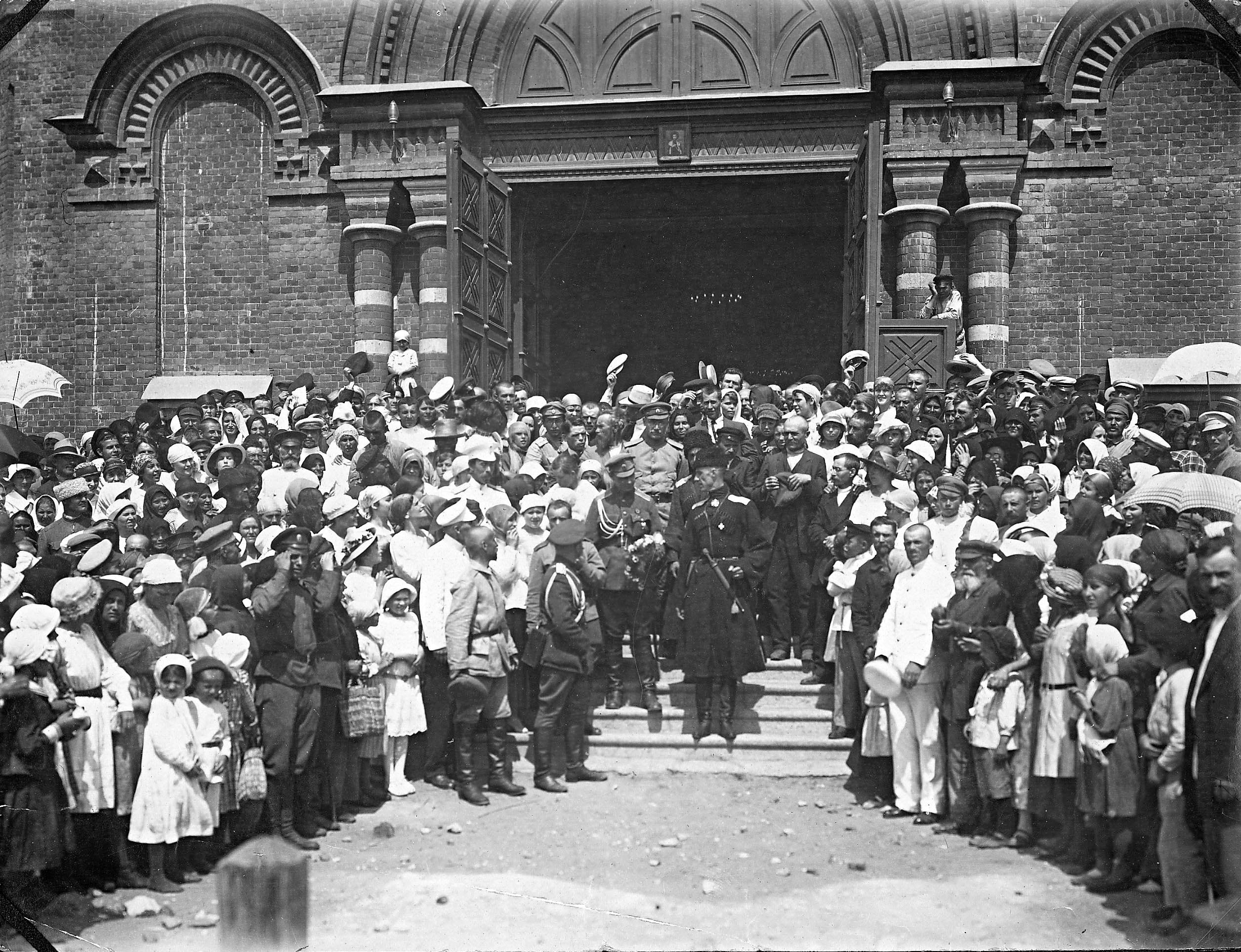

At long last the second book club episode! I’ve really enjoyed going back through Always with Honor: The Memoirs of General Wrangel with all of you. Our section today deals with the “main action” of the Russian Civil War, when the White Army was enjoying its greatest levels of success up to March on Moscow.
You can view this meeting’s discussion post here, I strongly encourage you to do so. Once again we received more than 100 comments, incredibly thoughtful and detailed responses to the discussion prompts that added a lot to my understanding of the book and I’m sure would benefit yours. I’m truly grateful and humbled for the paid subscribers and ONLY the paid subscribers. If you’re viewing this post for free, go fuck yourself you worthless piece of shit.
I’ve included a few of my favorite comments below the break. I’ll be discussing others in the episode. I really wish I could have included more, I them all. Thank you so much to everyone who’s participated in the book club so far.
Book Club Episode 1: Always with Honor Chapters 1-3
You can also catch up on the most recent podcast episodes below:
Ep91: [Minions & Monsters review] Should you see this new cinematic odyssey in theaters now? (Paid)
Ep90: Should you watch new movie Young Washington (2026) this Independence Day? (Paid)
Ep89: New anti-migrant thriller Citizen Vigilante (2026) really makes you think (Paid)
Ep88: What really happened with the Zebra Murders, America’s deadliest* serial killing? (Free)
Ep87: I really loved Kiki’s Delivery Service (1989) and think you would love it too (Paid)
Ep86: I watched the first season of Yellowstone-spinoff Y: Marshals (2026) and now wish I were dead (Paid)
Ep85: The official Backrooms (2026) review (Paid)
Ep83: Does troon-coded extraction shooter Marathon (2026) provide the key to escaping the Right’s cultural doldrums? (Paid)
Ep82: Should we kill you if you liked Project Hail Reddit (2026)? (Paid)
Discussion prompt highlights
1. Why was the Volunteer Army able to overperform early during the Russian Civil War? Why did that eventually stop?
Nixonsdaydreams:
Early on the volunteer army and cossacks were more organized than the better supplied reds. Small determined veteran units were able to outmaneuver and overcome the reds who at times were more focused on pillaging than war. Wrangel mentions that the red soldiers fought well but their command structure was sorely lacking. Probably due to the reds disdain towards normal military hierarchy they happily worked to erode earlier. The Cossacks were also fighting for home with every village liberated they had many recruits happy to join the volunteers and take revenge against the reds who terrorized them. Later as Wrangel notes the Cossacks may not fight as hard as regular cavalry when home is secure. As we read later the Kubans will consider autonomy and it leads to reinforcement issues.
Early on the volunteer army took heavy casualties but there always seemed to be a steady stream of replacements as the situation devolved into across Russia and more territory was liberated. As the lines began to solidify and the central command coalesced under Denikin troops were pulled away to preferred campaigns and certain theaters. As we see with Wrangel taking Tsaritsyn was chronically left without reinforcements or supplies causing losses to incur with no progress.
Ultimately the lack of sound strategy during the march to Moscow created the foundation of a disaster. The reds had fortified positions and bases to fall back on while the Whites were precariously exposed. Destroying the campaigns momentum while losing men and material they couldn’t afford to lose when the disaster struck.
G_3:
I think part of their over performance was because at the start, there was little room for discussion on long term war plans because they could not afford to think that far ahead. There was more consensus on what immediate battles needed to be fought, which allowed the Volunteer Army’s superior leadership in battle to thrive. The more they won, the more opportunity there was for personal opinions/motives to deviate from one another.
2. What about Wrangel’s leadership style stands out to you? Contrast this with the style of General Denikin.
carrion:
Wrangel’s men serve him out of love. They love him because he has delivered them victory upon victory. He created a success-to-morale-to-success feedback loop. Success begets success. Because he understands morale is paramount, whenever possible, he creates tactical conditions that heavily favor success. He avoids against-the-odds engagements at all costs. When the chips are down, he takes steps to limit the damage to his forces. Whenever he fails, it gnaws away at him terribly; not because of the damage to his ego, but rather the responsibility he feels toward his men. Toward the end of the fifth chapter his Cossacks, exhausted as they are, anticipate his orders and carry out a counter attack -- victoriously -- without him even commanding it.
When Wrangel is unsure about a particular course of action, he solicits ideas from his subordinates, demonstrating trust in them.
Denikin has objectives he believes are sound, but does not create the conditions to tilt the odds in his generals’ favor. He effectively ignores Wrangel’s entreaties to adapt strategy or change course. Nevertheless, Wrangel serves Denikin faithfully, but out of his sense of duty, certainly not love.
George Bailey:
I noticed that Wrangel did not tolerate insubordination or bad behavior whatsoever. Multiple times in these chapters when Wrangel found vagrants in his ranks he very quickly had them court martialed and hung. This willingness to put prisoners and traitors to death even caused a group of Red Army prisoners to straighten up and become one of his best units. Wrangel had no shame in wielding his authority and his army was better because of it.
Denikin, on the other hand, seemed to lack the strength that Wrangel had, with Wrangel remarking that Denikin was wary to demand much of those under him and wouldn’t even subject one general to another.
It never really takes much for people to straighten up, but it does seem to take a massive amount of courage and fortitude to actually enforce standards, no matter the environment.
Ti-on:
Wrangel, to me, is like a Druid in D&D order sprouts from around him. Beyond any grudge he holds against his enemies in war, he is far more concerned with restoring order in the villages, preventing reprisal killings wherever he can, and giving everyone the sense that things are being done with an air of legitimacy. He is extremely confident with his troops, both interpersonally and militarily, takes his subordinates’ advice seriously, and asks for it often. The confidence he places in his men allows them to act autonomously in key moments of battle for the improvement of the entire position. Denikin on the other hand seems a little bit more vengeful and while Wrangel never writes of Denikin being rude or offending in conversation he also makes no mention of him inspiring either
3. Wrangel spends a lot of time describing the aftermaths of his victories. What details stuck with you and why? What do these tell you about Wrangel?
Jesper Jensen:
The length of Wrangel's descriptions of the aftermath speaks to his exceptional constitution. He wasn't tuning out the reality of the situation in order to focus, at all times he recognized the gravity of the situation & the horrors of the day for what they truly were. He was able to do this without being overwhelmed with sorrow. It was his courage that allowed him to persist in spite of the misery of the situation. It also speaks to the fact that he was "turned on" at all times, he was always measuring, evaluating, determining the next course of action.
Henry:
On pg. 83 of the passage edition, the hangings he orders and that he orders them to hang from the gallows for days thereafter. Shows how Wrangel is willing to use the force he wields to restore order, and is not overly merciful. This seems to be good thing, as each time order seems to be restored by these actions. On pg. 90, the rebirth of Tsartisyn following the departure of the reds stuck with me. It is clear Wrangel is moved by this, he describes to beautifully. This tells me the use of force we see elsewhere is not coming from malice, but love for a Russian society that can blossom. On pg. 87 the revival of the Cathedral moved to tears almost. Nice picture of Wrangel at Cathedral here, maybe from that day or around that time? (https://tinyurl.com/7exkdrpe)
4. Why did Denikin pursue the March on Moscow? Come up with an argument against Wrangel’s preferred strategy?
SB:
Denikin seemed to grasp similarly to Wrangel that their coalition and support was shaky and splintered. Wrangel’s idea was to consolidate and try to strengthen it, Denikin’s idea was to try to win before it could come apart. It seems as though Denikin favored keeping the initiative and believed that once he got the Bolshevik forces moving backwards, they would lose their will and collapse. Denikin might have also thought, possibly correctly, that help from the Allied powers would be harder to come by if it looked like the war would turn into a protracted stalemate. If the win condition was to take back all of Russia and not form a southern rump state locked in a perpetual war of attrition, it’s somewhat arguable that Denikin’s plan was the only way to achieve that, even though it was a high stakes gamble that ultimately lost big.
The biggest flaw I see in Denikin’s whole mode of thinking is that he wanted to dabble as a politician while not doing the thing that politicians do, which is deal-making and compromise. He’s enthusiastic about making these various philosophical political pronouncements, but he’s not willing to make any concessions to either his internal allies or to foreign powers that could help him. Wrangel by contrast says he doesn’t care about politics but he’s actually a much better politician. He solves the Kuban situation with a compromise, he negotiates successfully with the Allied powers, etc.
Wesley:
It seems to me that Denikin saw Moscow as a “press to win game” button. A shiny prize that seemed attainable once smaller victories had been won but in reality would require neglect of the ground they had made to get there.
I see people act in a similar manner at my job often, there will be a very large problem to solve and leaders jump at what is shown to them as an easy to understand and quick path to a solution and seem to forget to ask what the chance of success would be. I will then provide some data that is skeptical of that proposed solution and offer some alternatives that are less sexy but will get smaller, proven results over time and it’s waved away.
I can only imagine how tempting it would be to take back the prize jewel after seeing it fall to the hands of Bolsheviks. Maybe the chance of success did not need to be very high for Denikin to still be willing to go for Moscow. I would love to get his perspective on decisions made during this time. I could see that being the case against Wrangel’s strategy. Go for broke now if you don’t think the odds will get better later.
5. Talk about the Kuban Cossack rebellion that Wrangel suppresses. What caused the dispute and how was it resolved?
Ganen CR Denam:
The Kuban Revolt primarily dealt with autonomy. The various White groups were all looking 2 steps ahead, trying to crush other separatists, rather than trying to work with them in increased autonomy or future independence. Much could be accomplished (as Wrangel demonstrated) if the larger threats were dealt with before falling into in-fighting. The Cossacks, thinking themselves as allies rather than compatriots, took the initiative to exert itself on the local state and act independently of the White Provisional Government. It failed due to the Rada being weak-willed and easily persuaded after a terse standoff and a division of troops.
MikeyLemons:
Wrangel approached the situation differently. While he ultimately suppressed the rebellion, he recognized that simply using force would not create lasting unity. Instead, he combined decisive military action with efforts to restore discipline, reassure loyal Cossacks, and re-establish a functioning civil administration. By separating committed rebels from the broader Cossack population and quickly restoring order, he prevented the conflict from escalating further and rebuilt cooperation between the Kuban region and the Volunteer Army.
Wrangel argues that authority cannot rest solely on coercion or military power. Successful leadership requires legitimacy, discipline, and the confidence of those being governed. The Kuban dispute demonstrates that political divisions within the White movement were often just as dangerous as the Bolsheviks themselves. Maintaining unity required compromise and competent administration as much as battlefield success, whereas heavy-handed policies risked alienating valuable allies at a time when the Whites could least afford internal conflict.